Cartography and the Hero’s Journey as a Guide for Inner Healing
Every compelling narrative catapults from the space of a crisis, a call to action, or an inconvenient Damocles sword. American mythologist and Sarah Lawrence College Literature professor Joseph Campbell called this pattern the Hero’s Journey. It is the mythic cycle that unravels and untangles during epic plays and novels, and that haunts the shadows within imaginative fairy tales for kids and adults. However, it also swirls through the messy narratives of our own lives. Although Campbell wrote about heroes and gods, he was actually using metaphor to describe the psyche’s roadmap for transformation. Whether we’re trekking through Peru’s Sacred Valley of the Incas or simply getting through another Tuesday, we’re all walking the same ancient path of descent, discovery, and return.
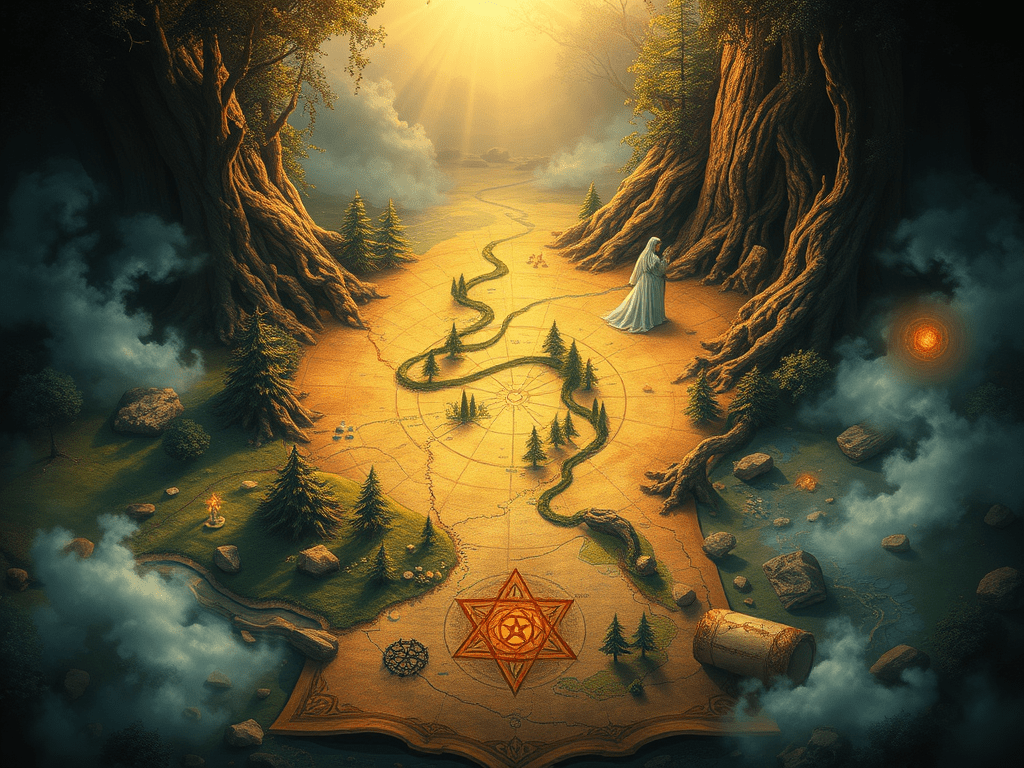
Ritualized healing and psychological growth share a common thread of secret, and it is that both require adventure. The Hero’s Journey is not a literary device; it is an archetypal process embedded in human consciousness. In therapeutic terms, it’s the movement from ordinary awareness into symbolic depth; it is the moment we cross a threshold into the unknown to meet what Carl Jung called the shadow. This archetypal process, when incorporated together with the four stages of ritualized magic known as purification, creation, transformation, and grounding, form a map for inner pilgrimage.
When the Cozy Zone becomes Confinement
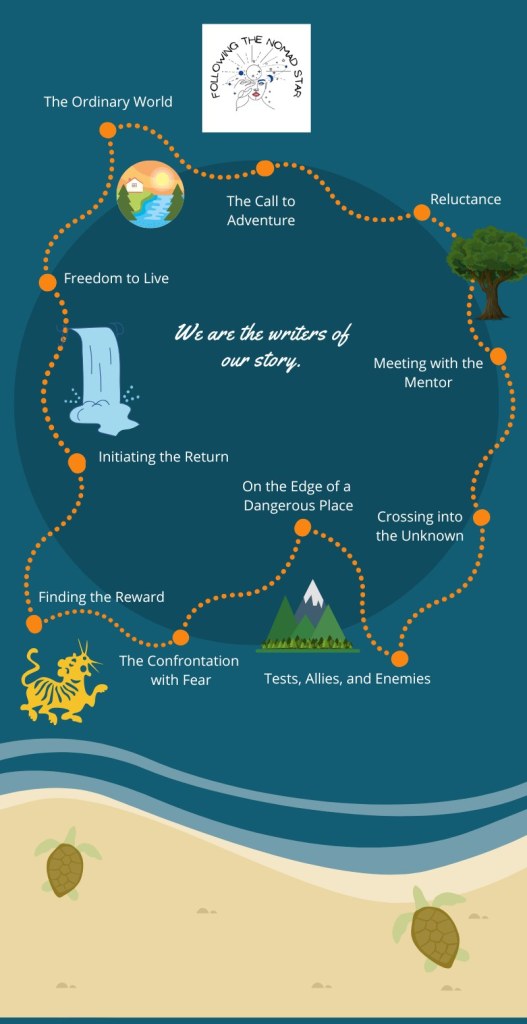
The call to adventure arises when life as we know it becomes too confining. Discomfort, loss, or restlessness knocks at the door of our consciousness, inviting us to confront that space of the unknown and step into it. When we feel that call and ignore it, we are refusing our own growth and transformation process. It is during these times that we project our internal discomfort either consciously or unconsciously onto others or into the tedium of daily life, and thus, we become “busy.” “Busy” but accomplishing nothing. “Busy” but counter productive. “Busy” but numb to our own needs.
Sooner or later, we must cross that threshold into the unknown, either of our own volition or shoved into it as a result of our refusal to grow. The Universe (and the trees and the rivers and the minerals and the other humans and all of thermodynamics) wants each of us to heal and grow. (It is in everything and everyone’s eternal best interest for each of us to nurture our long-suffering karmic wounds and evolve into our most compassionate and Bodhisattva-minded beings). Entering this threshold is the pivotal act of healing; accepting the uncertainty is itself an initiation. The San Francisco-based scholar and documentarian Phil Cousineau notes that “a person’s soul cannot grow in a world that is too familiar.” Healing, like heroism, requires leaving our familiar shores of what is already known to us.
Inviting a Walk through the Liminal Space
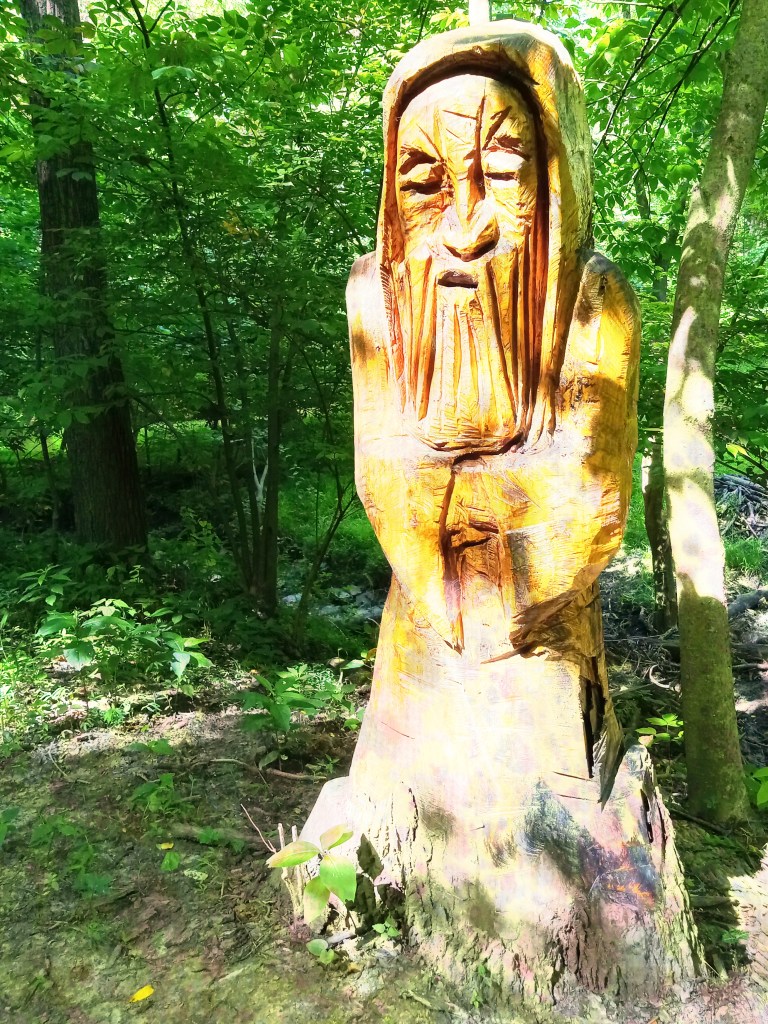
In traditional shamanic practice, this crossing might involve literal journeying into wilderness or trance; in modern eco-therapeutic visualization, it might mean entering an inner landscape where each symbol carries medicine. A cave, a river, or a lightning storm aren’t simply visual props; they are mirrors of the psyche’s terrain. As in myth, the monsters encountered are projections of our own fragmentation, and the helpers such as wise elders, animals, or ancestors are facets of our higher knowledge.
Campbell described this central ordeal as “the belly of the whale,” which is a liminal zone of dissolution and rebirth. In guided meditation, this might correspond to the phase of surrender, when old beliefs melt away. Neuropsychology would call this the default mode network quieting down, allowing new neural pathways to form. In spiritual language, it’s the death before resurrection that precedes insight.
A New Imagination
When the hero returns, they bring back an elixir, which is wisdom, forgiveness, or creative vision that heals both Self and Community. Transformation that ripples outward is the purpose of growth. Too often, modern life keeps us trapped in perpetual departure without return. We chase experiences but resist integration. The Hero’s Journey reminds us that completion and returning home changed is the true miracle.
The journey also reframes suffering. Instead of pathology, struggle becomes pilgrimage. The breakdown becomes the threshold. As mythologist Michael Meade writes, “the wound is the place where the soul enters.” The descent into darkness is not failure. Earth-based traditions have always understood this. Seeds germinate in the dark, caterpillars dissolve before flight, and forests regenerate after fire. Healing follows the same law of transformation through compost.
In contemporary practice, this mythic structure can inform both therapy and spiritual growth. Eco-therapists use symbolic journeying to help clients move through trauma narratives toward meaning. Ritualists use the same arc of separation, ordeal, and return to structure ceremonies of release and renewal. Even guided visualizations in mindfulness training borrow the hero’s architecture. We begin in safety, enter challenges, transform, and re-emerge into the present moment.
Embracing Natural Cycles of Growth
Herbalist and writer Asia Suler captures this cycle beautifully in Mirrors in the Earth, writing that “the soul’s growth happens not in straight lines but in circles that spiral ever deeper.” The hero’s path, then, is not linear conquest but cyclical evolution. We keep returning to familiar landscapes of challenge, only to find they’ve changed and so have we.
Something like a hero’s journey can feel grandiose when in the modern West our daily battles are mostly Wi-Fi outages, endless road construction, protecting families in our communities from illegal detainment, shortages of canned food, and existential dread from the rising authoritarian state. But myth doesn’t measure scale; it measures sincerity. The alchemy is the same regardless of how we identify the dragon: step forward, face it, find the wisdom hiding in the discomfort, and bring that wisdom back to the tribe.
Each small act of courage, every honest conversation, and every self-forgiving breath is its own hero’s arc. When we step through fear into awareness, we’re crossing the threshold of mythic consciousness. We’re proving that transformation doesn’t require epic quests, only ordinary bravery enacted consistently.

