Two North American Buddhist Communities Who Welcome Travelers along the Way
Chagdud Gonpa Rigdzin Ling is nestled in the remote Trinity Alps of Northern California. It’s a jewel hidden behind the Trinity River and Highway 299 deep in the Trinity National Forest whose name means, “the abode of the Awakened State Holders.” The site is a Buddhist educational center for retreats, ceremonies, meditations, practice groups, and Padma Publishing.
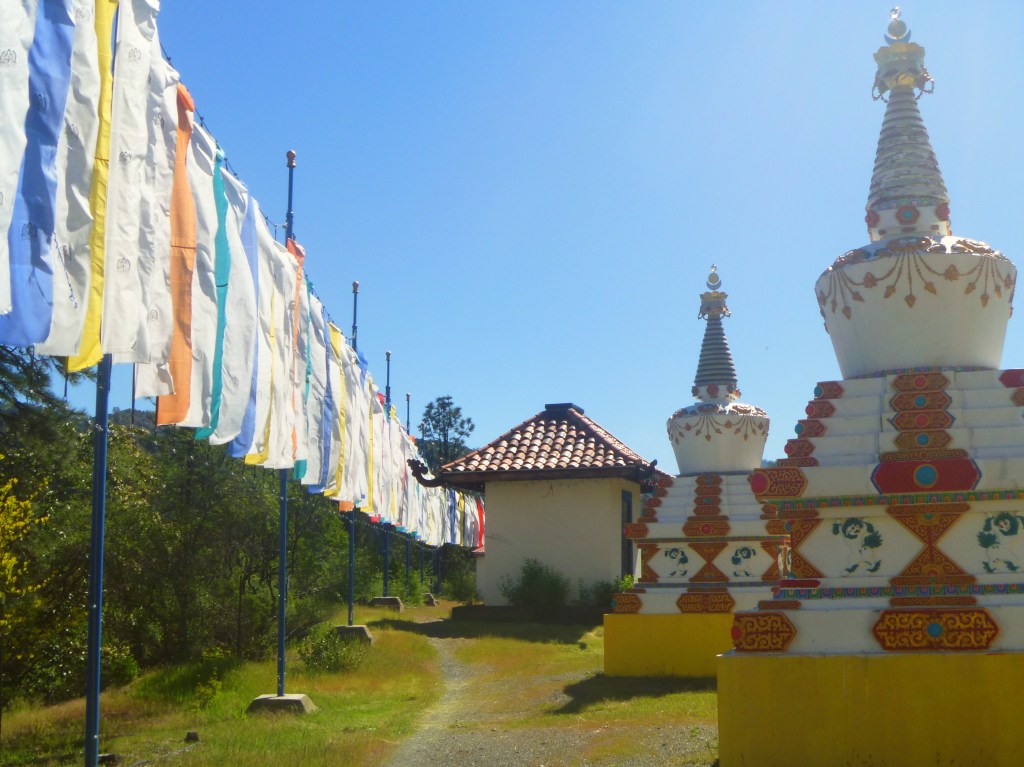
Overnight visitors who respect the space are welcome. To respect the space means to refrain from alcohol, cannabis, tobacco, amplified sound, loud voices, and speaking at all while in the Tara House or Prayer Wheel House. Come on, people are trying to meditate. If that all sounds reasonable, you have several lodging options. Budget travelers can choose from tent camping or what is called indoor camping. Indoor camping is sleeping in a shared space like a lodge or the yurt with others. All travelers must bring our own bedding.
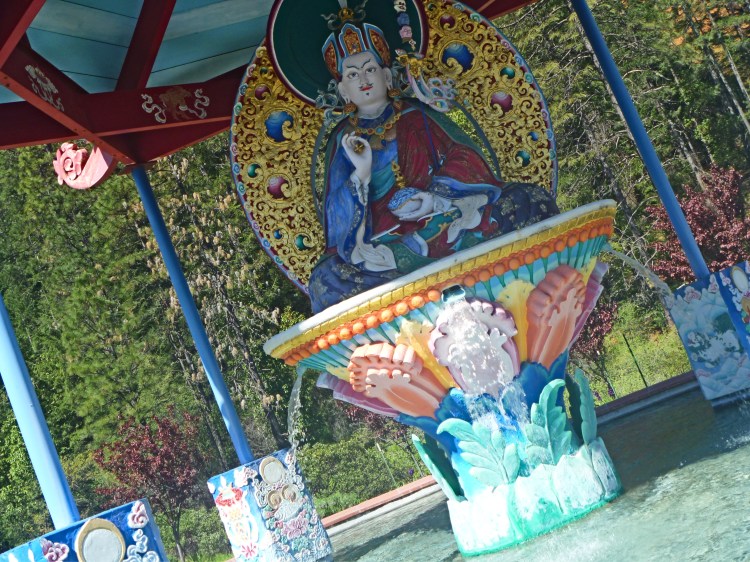
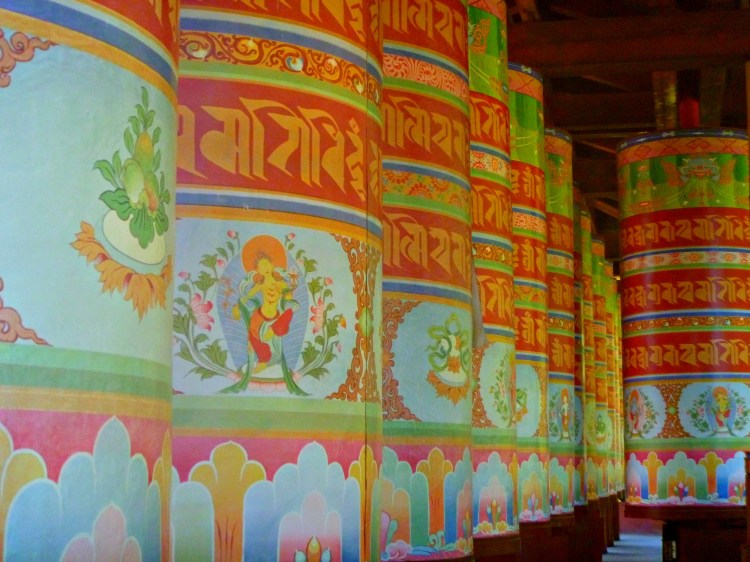
Listen for the whistle of the Prayer Wheel House. The spinning of fifteen giant wheels whisks the energy of 10 million Vajrasattva mantras into the clear mountain air, and returns to humanity as an experience of purification. Rigdzin Ling’s founder, Chagdud Tulku Rinpoche, commissioned the Prayer Wheel House after his mother passed away when he was eleven years old. He had been on retreat when it happened, and he declared that her assets be used to construct the space so that “all who come there and pray with would be cleansed of obscuring habits and poisons of the mind.”
The Tibetan Mongolian Buddhist Cultural Center outside of Bloomington, Indiana, is a centrally located doorway into Eastern thought from the comfort of the American midwest. It was originally established in 1979 to preserve Buddhist traditions among the Tibetans and Mongolians in exile from Communist regimes, and since has expanded its scope to foster peace, harmony, and cultural exchange.
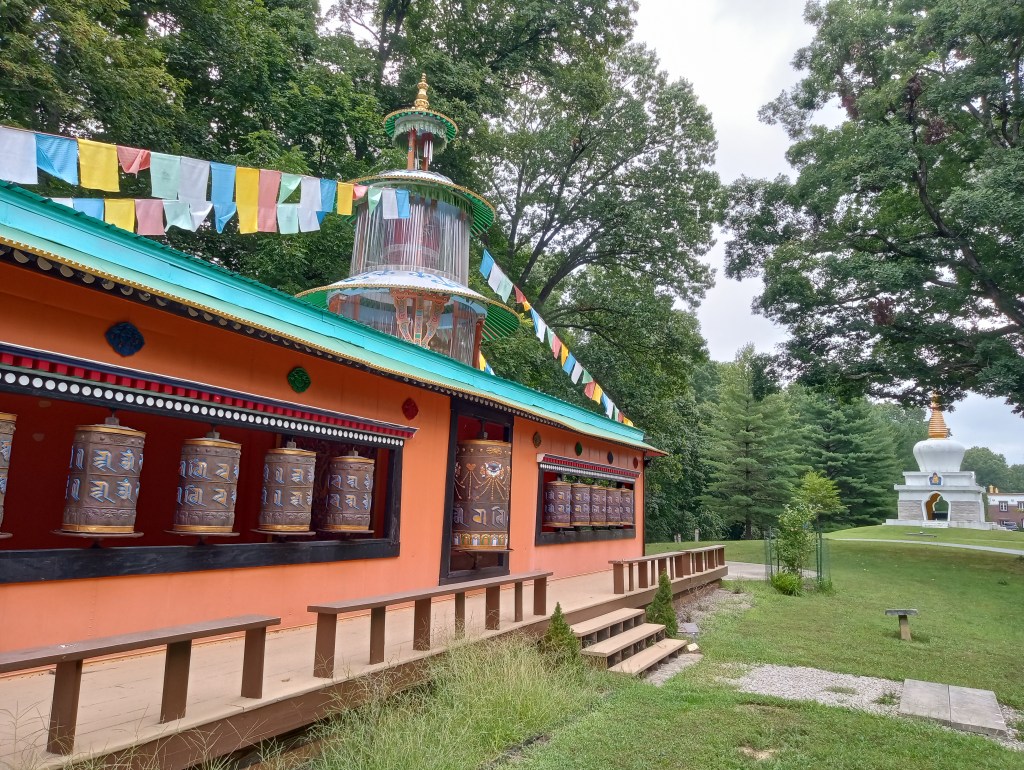
In 2005, the Dalai Lama invited the Chinese Buddhist monk asylum-seeker Arjia Rinpoche to relocate from Mill Valley, California, to Bloomington, Indiana, to direct the center since the founder was approaching an older age. Arjia Rinpoche accepted the request and he is the current Abbot. Like Chagdud Tulku Rinpoche, Arjia Rinpoche is a “tulku,” or someone recognized from a young age to be the reincarnated being of a previous holy person. These individuals are on the Bodhisattva path, and the belief is that they chose to return to Earth as ascended masters who joyfully accept the human experience of suffering to fulfill their Dharma, their spiritual purpose.
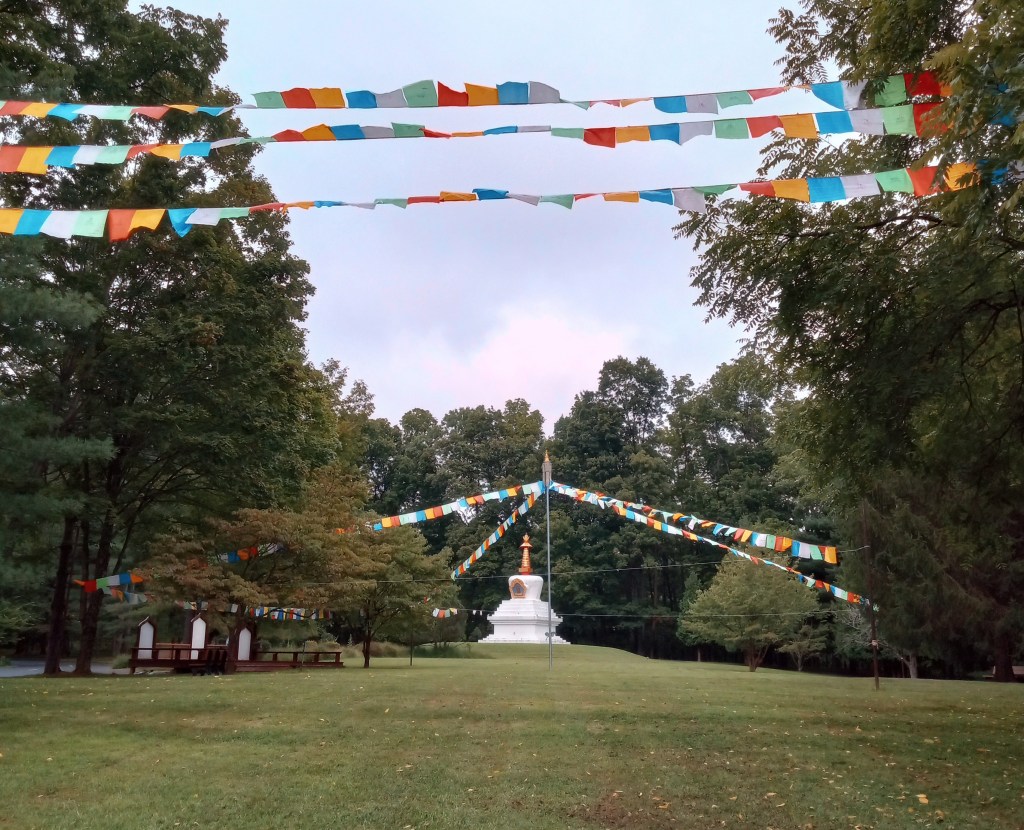
Look for the brightly colored prayer flags. Each individual flag is printed with the wind horse symbol and mantras for positivity of mind, wealth of spirit, and health of body. The colors also have meaning. Blue is sky, white is air, red is fire, green is water, and yellow is earth; together, they represent balance. As they fray and whither in the sun and the weather, the fabric unravels and the energy of the mantras is spread over the land. The threads travel and depart from their experience as a flag, but leave behind a profound meaning of a path that is accepted and followed.
 Following the Nomad Star