A Brief History of Native-Settler Interactions in Very Early Cincinnati
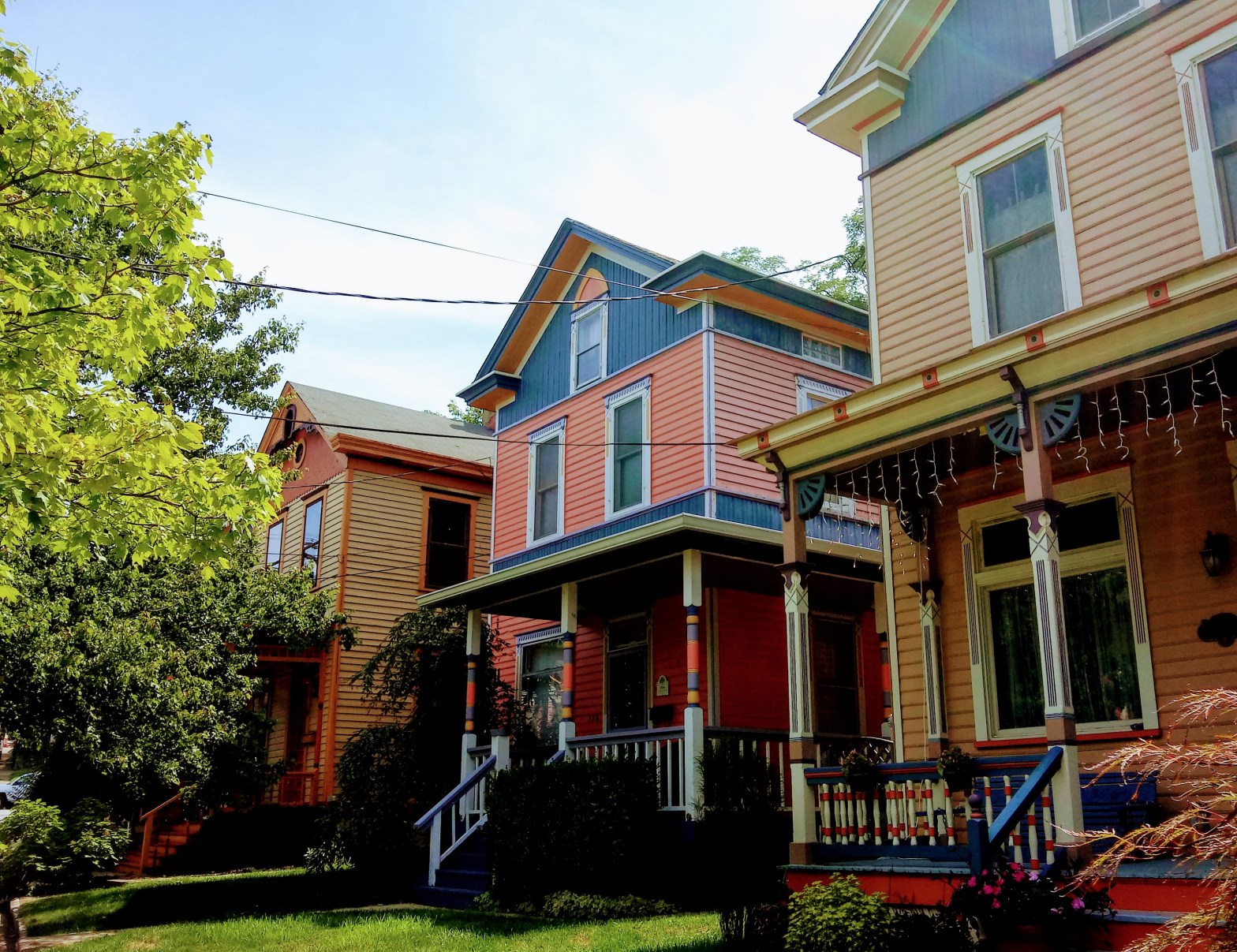
While exploring one of Cincinnati’s most charming neighborhoods of Columbia Tusculum on a sunny summer day, I was reminded that the tale of history on colonized land is woven into the language of the colonizer. That’s why Grandmother’s Foot in Bogota, Colombia, is now called Montserrat, and why El Panecollo in Quito, Ecuador, is no longer a temple to the sun. In the swift current of time and war, the multitude of perspectives erodes like sediment, washed into a lost ocean.
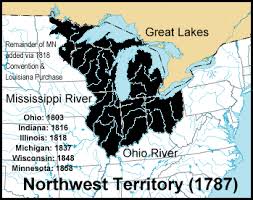
Columbia Tusculum is the oldest neighborhood in the City of Cincinnati, and the second oldest white settlement in the Northwest Territory. The Northwest Territory was founded in 1787, and included what would become the states of Ohio, Indiana, Illinois, Michigan, Wisconsin, and part of Minnesota. Its formal name was the Territory Northwest of the Ohio River.
The Disappearing Horses
White people settled what is now Columbia Tusculum in the late 1700s. A guy named Benjamin Stites from Pennsylvania was on a hunting expedition in Kentucky when a group of Native People made off with his horses. Stites followed them but they were gone. However, he decided that the area would be prime real estate for his settlement. He returned to his family in Pennsylvania, and immediately negotiated an agreement with a New Jersey Congressmen named John Cleves Simms. Simms purchased a large piece of land in the newly established Northwest Territory, and sold Stites a 20,000 acre parcel at less than a dollar an acre, near the confluence of the Ohio River and Little Miami River.
Stites gathered a settlement party of 26 people from New Jersey and journeyed west. They anticipated hostility and conflict with Native People, but they encountered none. Although they had heard rumors of 500 Native People waiting for them, everyone arrived safely on the morning of November 18, 1788.
No One Likes a Sour Vibe
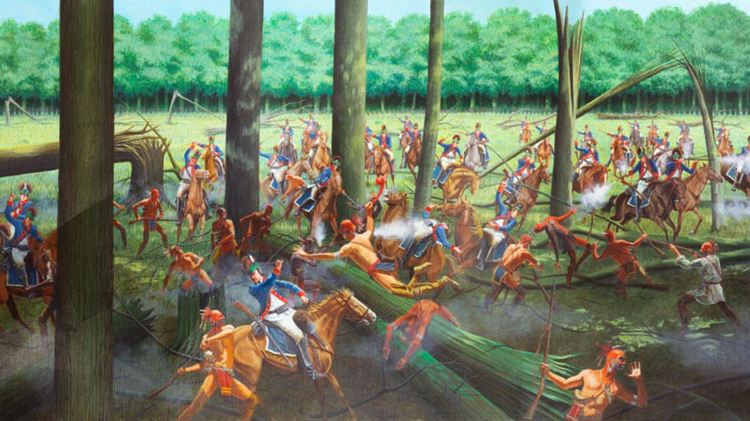
Relations with the Native People were pleasant enough in the very early days of the settlement but they soon turned sour. History records murder and kidnapping of the white settlers, earning the area the dire nickname “Slaughterhouse.” A few years later in 1794, the US army staged the Battle of Fallen Timbers along the Maumee River in Northwest Ohio. This would be the final battle in the Northwest Indian War between the Native People affiliated with the Western Confederacy and the United States. The leaders of the Western Confederacy included Chief Little Turtle of the Miami, Chief Blue Jacket of the Shawnee, Chief Buckongahelas of the Lenape, Chief Egushawa of the Ottawas, and others that history has rendered invisible. At least one tribe, the Chickasaws, fought alongside the US as allies. Although the battle itself was only about an hour, its consequences resulted in the forced displacement of the Native People from what is now the State of Ohio.
Settling into the 19th Century
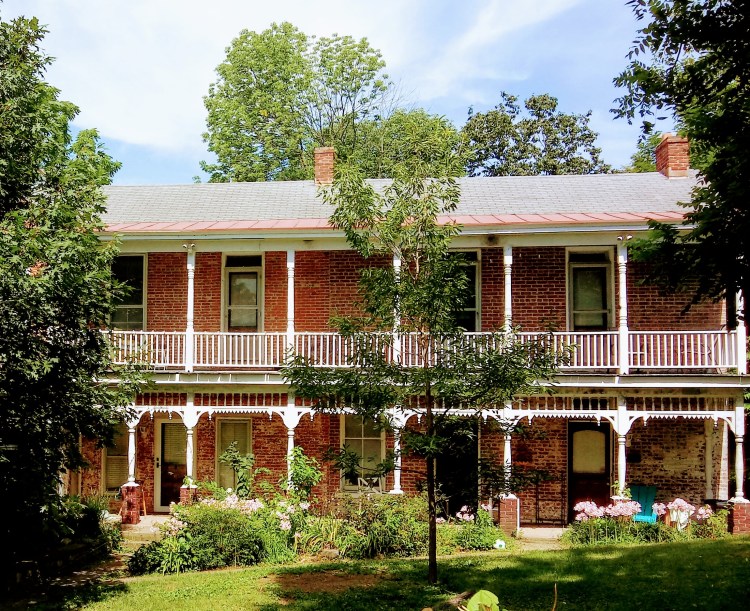
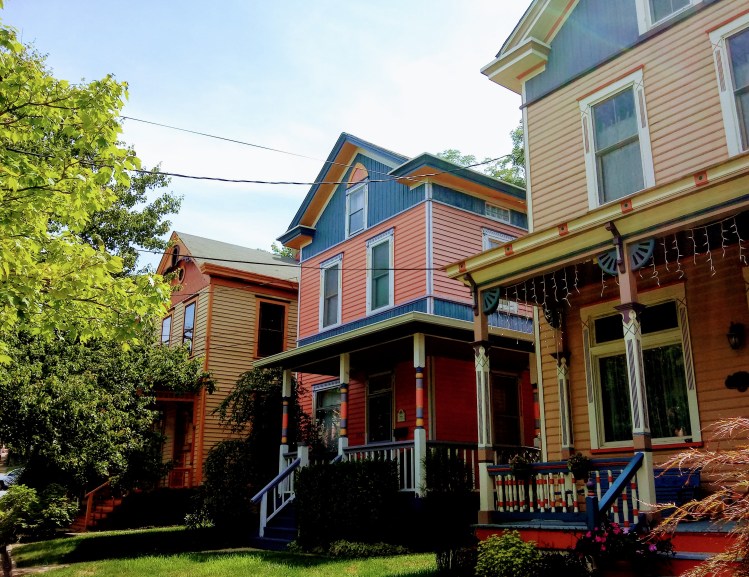
After the victory at the Battle of Fallen Timbers, the white settlers in Columbia Tusculum felt safe to construct their homes with less safety measures. However, as they began to expand their settlement, they realized they were building on a flood plain of the Ohio River. They relocated to the foot of Tusculum Hill in 1815, and most of that existing neighborhood is still around. The oldest home that is still occupied nearly 225 years later is at 3644 Eastern Avenue and was built in 1805. It has evolved over the years, from a modest log cabin to its current style of Gothic Revival. Today, many of the houses in the neighborhood of Columbia Tusculum are on the National Registry of Historic Places, including the rows of “Painted Ladies” that line Tusculum Avenue.
Although the institutions and dominant culture have not fully acknowledged the genocide of the Native People and their forced displacement, the Ohio River Valley and the State of Ohio have made attempts in more modern times to preserve, protect, and share the indigenous history that remains. Within driving distance of the City of Cincinnati are multiple mounds such as Fort Ancient, Indian Mound Reserve, and the well-known Serpent Mound. We can’t change history, but we can raise our awareness, shift our perspective, and compassionately recognize that the land is native land and treat it with love. Participate in landback movements through consciousness and donation. Learn about land acknowledgements and introduce the practice into your spaces and circles. Support indigenous travel and tourism when possible. No more sour vibes.
 Following the Nomad Star