
A new subdivision is being constructed across the street from where I am currently living. Two years ago, this had been a woodland meadow of grass and wildflowers. Often on my walks, I had noticed Cooper’s Hawks circling and hunting overhead. Construction began last spring, transforming the prairie into a field of mud as the trees and vegetation were stripped and leveled. The summer brought a din of construction trucks that pushed clouds of dust into the air, transforming the natural grassland habitat into a cul-de-sac-sans-sidewalk of maybe three single family homes. For a few weeks, the hawks circled in larger numbers as their competition for food increased, and then I no longer saw them. They had moved on.
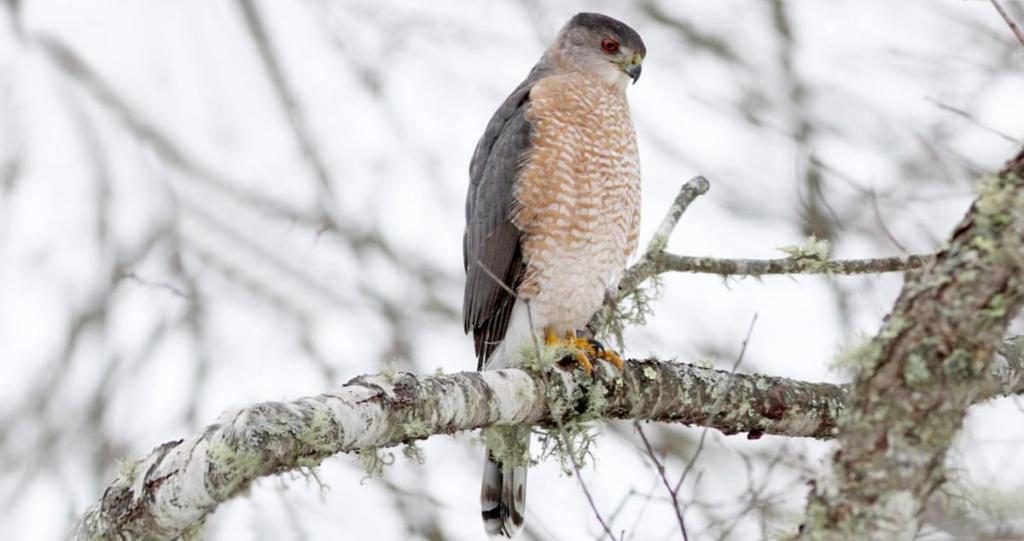
Cooper’s Hawks are one of several year-round birds who essentially “shelter in place” through winter months in the Ohio River Valley. Other species are the robin, goldfinch, barred owl, carolina wren, the bluebird, the cardinal, and the downy woodpecker. With its moderately temperature winter climate, the area also hosts birds from more northern regions like the tree sparrow, bald eagle, great horned owl, winter wren, and the brown creeper. Scientists estimate that the bioregion in winter is home to at least 150 species of birds.
These year-round winged friends are pretty important for our ecosystem services. Ecosystem services refers to all the benefits that nature provides, like how the trees produce oxygen and sequester carbon; how the marshlands filter water; and how some plants convert sunlight into energy for food, and how others convert sunlight into energy for medicine. It’s a term that the capitalists developed to quantify the value of nature in a dollar-driven language, and I see use for the term because it does frame our human activity within a language that indicates a relationship with nature and not outside of it. It places us within the web of life.
Our winged friends contribute to this web of life through many roles. They are predators, pollinators, scavengers, and engineers. They help plants reproduce and diversity, they disperse seeds and restore ecosystems, and they mitigate disease by clearing carcasses. If they disappeared from the planet or if their number were to significantly decrease, we would first notice a distinct decline in global reforestation and plant regeneration rates.
One way to create a good relationship with these beings is to help them out in the winter with some additional seeds. Birds have a lot to contend with for survival, between habitat loss, the avian flu, and frigid temperatures. According to the Aldo Leopold Foundation, birds with access to seeds during winter have an increased chance at staying alive through extreme cold spells, and improved reproduction in the spring.
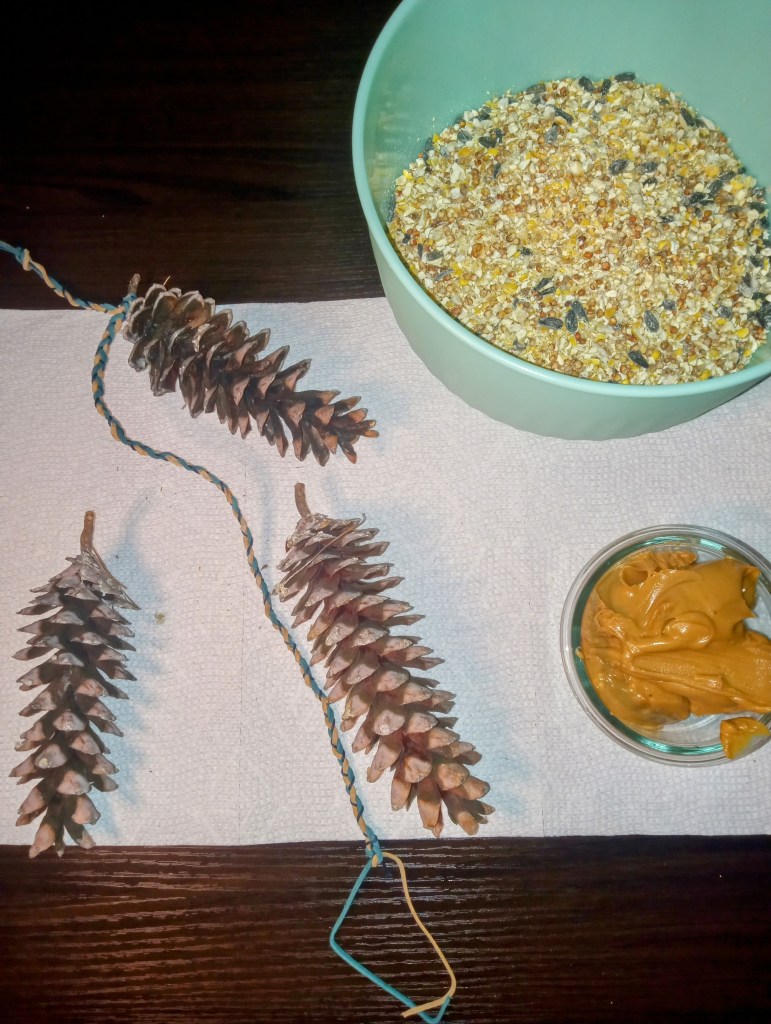
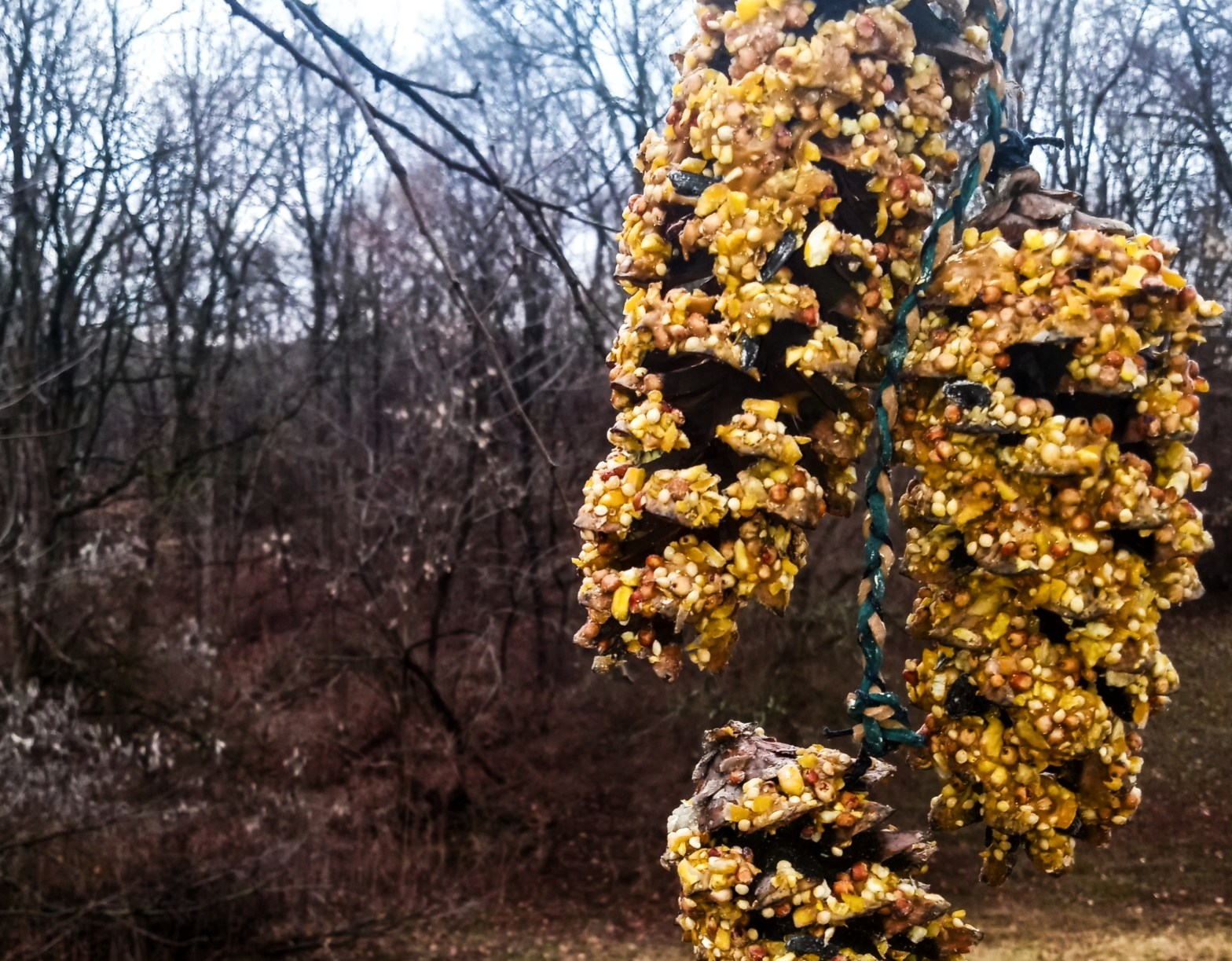
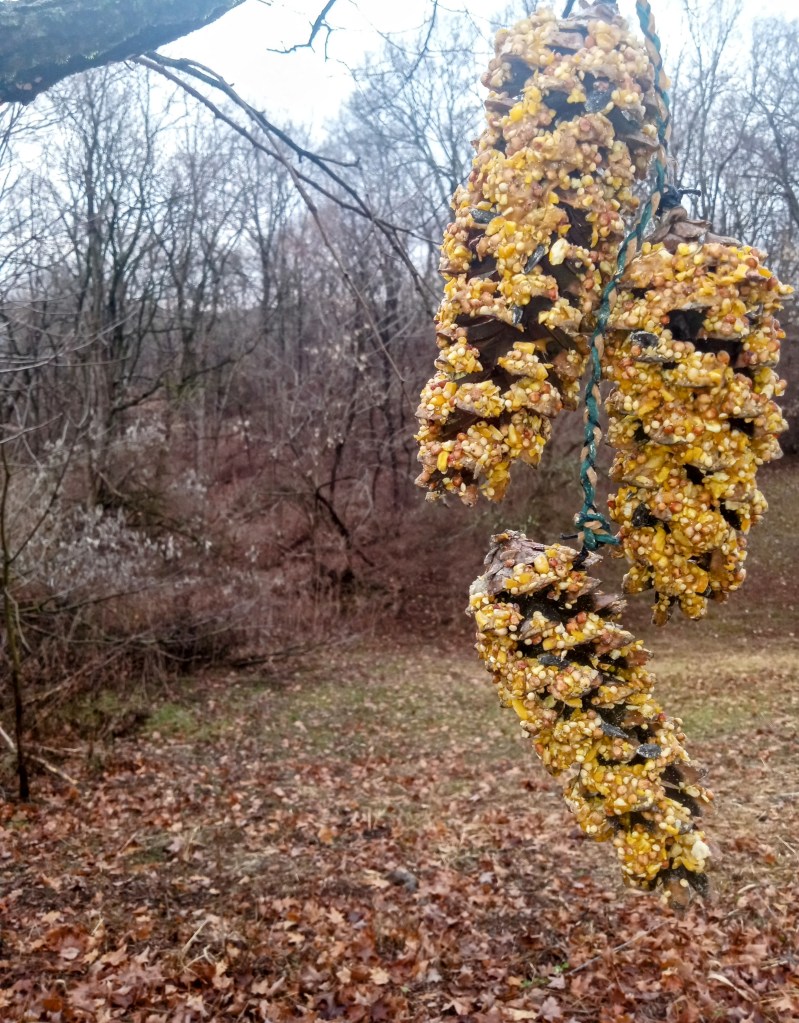
Pine cone bird feeders are an easy and accessible option that uses all natural materials to create a food source. The first step is to collect pine cones, then all you need is bird seed and peanut butter. Add a decorative weave to secure the pine cones to a branch, and you’ve got helpful eco-art. Some seeds are more preferred over others. Look for mixes with black-oil sunflower seeds, cracked corn, and peanuts. Don’t feed any birds bread or popcorn.
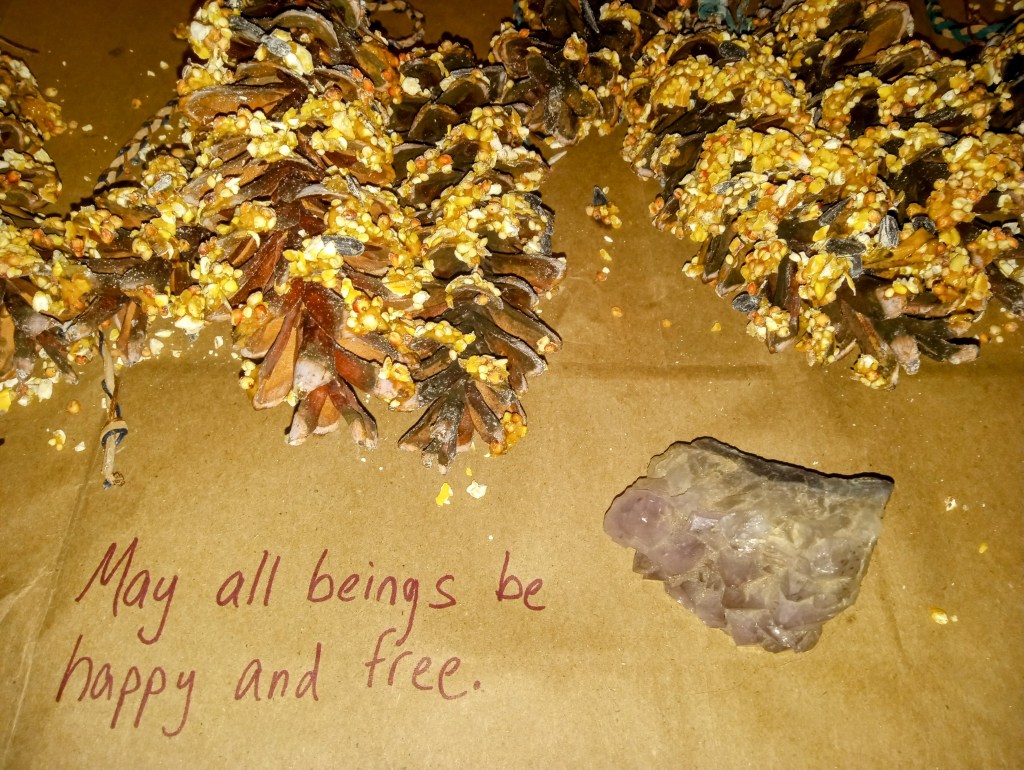
Add a mantra to enhance their energy vibe. I use Lokah Samastah Sukhino Bhavantu, which translates from Sanskrit to English as “May all beings everywhere be happy and free, and may the thoughts, words, and actions of my own life contribute in some way to that happiness and that freedom for all.” Small actions can produce deep results.
 Following the Nomad Star